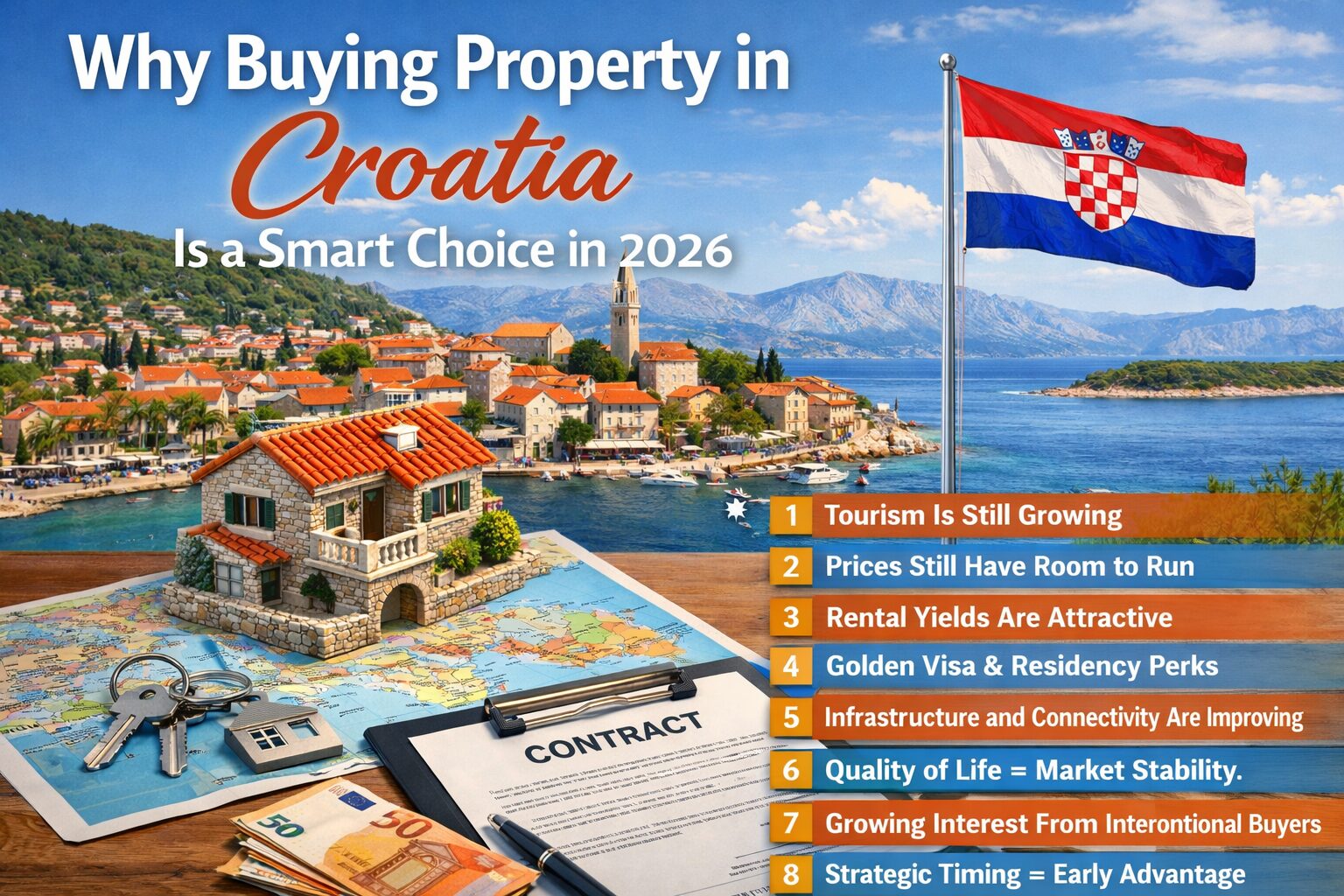
Croatia continues to attract buyers from all over the world who are looking for a great lifestyle and promising investment opportunities. Whether you are dreaming of a seaside home, a quiet countryside retreat, or a property with potential to let during the high tourist season, Croatia offers appealing options. For many, the appeal goes beyond the beauty of the Adriatic coast, making this an ideal time to consider buying property here.
In this article, we’ll explore the benefits of owning a home in Croatia, address common concerns for foreign buyers, and explain how the buying process works.
—
Why Buy Property in Croatia?
Enjoy a Mediterranean Lifestyle Year-Round
Croatia offers more than just remarkable coastal views. Mild Mediterranean winters and sunny summers invite you to spend time outdoors, enjoying everything from fresh seafood and local wines to sailing, hiking, and cultural festivals. Owning property here means access to a better quality of life—whether it’s a place to spend summer holidays, a year-round residence, or a weekend escape.
Stable and Growing Real Estate Market
While the Croatian property market has matured in recent years, it remains a sensible investment destination. Prices outside the biggest hubs like Dubrovnik or Split are still competitive, offering value and potential appreciation over time. Croatia’s economy and tourism sector have shown resilience and gradual growth, translating into stable demand for real estate. Properly selected properties can provide good rental income or long-term capital growth.
Straightforward Ownership Rights for Foreigners
Since Croatia joined the EU, property ownership regulations for foreign buyers have been harmonized and simplified. Citizens from the EU can buy property almost like locals, while others do require a special permit, which is generally obtainable without difficulty. This brings a higher level of legal clarity and comfort for buyers planning their purchase in the mid-2020s.
—
Common Concerns and How to Approach Them
Concern: Navigating Legal and Administrative Processes
Buying property abroad can feel overwhelming at first. The paperwork, language barrier, and understanding local rules tend to worry buyers. With crisp legal frameworks and official procedures, the smooth completion of your purchase is largely down to careful preparation and expert support.
Proper due diligence includes verifying property titles, ensuring no debts or liens, and completing necessary registrations. Working with professional real estate companies and lawyers knowledgeable in Croatian property law simplifies the process and reduces risk.
Concern: Additional Costs
Initial research into the Croatian property market often reveals extra fees beyond the asking price—such as taxes, fees for notaries and lawyers, and real estate agency commissions. Buyers commonly underestimate these expenses, which usually amount to around 6–8% of the purchase price.
Having a clear budget that factors in these costs beyond the purchase price is essential for planning. Unlike in some countries, property transaction taxes in Croatia are relatively low (3% for transfer tax) and incentivize straightforward deals.
Concern: Market Fluctuations and Resale Options
It’s natural to ask, “What if property prices change or I decide to sell?” Market cycles are part of any real estate scenario. The Adriatic coast benefits from consistent demand due to tourism and increasing interest in alternative living locations. Coastal towns and islands maintain their appeal, reassuring long-term value.
Robust local infrastructure and ongoing regional development add confidence for buyers in 2026. Most importantly, buyers with a clear purpose—be it lifestyle, investment, or retirement—tend to have a greater measure for optimal decision-making. Identifying what type of property and location fits your goals greatly reduces resale concerns.
—
Understanding the Purchase Process
Step 1: Define Your Priorities and Budget
Start by considering your property type, location preference, and budget. Is your focus more lifestyle oriented, wanting charm and community, or aiming specifically for an investment property with high tourist rental potential?
Croatia offers diverse regions—from cities with rich heritage to quiet inland villages and lively coastal resorts. Valera Estate can help you compare options tailored specifically to your needs and current market availability.
Step 2: Property Viewing and Due Diligence
Once you know what you’re looking for, viewing a few properties in person is highly recommended. Virtual tours and accurate photos are helpful but nothing beats walking through homes and environments to gauge suitability.
During this phase, legal checks and inspection for structural or administrative irregularities are usually started alongside viewing. Experienced agencies coordinate these seamlessly to protect your interests.
Step 3: Making an Offer and Signing the Preliminary Contract
After selecting your preferred property, you can settle on price terms with the seller. A preliminary contract, or “pre-contract,” is signed, and a deposit may be transferred, typically 10%. This locks in your intent to buy and outlines conditions like deadlines, responsibilities, and government permit requirements for non-EU citizens.
Step 4: Final Purchase and Ownership Registration
When all the conditions are met and necessary permits are received, the final sale contract is signed before a public notary. The buyer then pays the remaining amount, formal ownership documents are issued, and the deal is registered with local authorities.
This completed process confirms the official transfer of property ownership under Croatian law.
—
Working With Valera Estate
Experienced, professional support can make the difference between a smooth property purchase or a frustrating experience. Valera Estate has been assisting buyers in navigating offerings across Croatia’s diverse property landscape. Clients benefit from clear communication, tailored property suggestions, and guidance on all aspects—from selecting the right home to addressing legal and administrative hurdles.
Valera Estate places importance on building trustworthy relationships rather than rushing transactions, helping first-time foreign buyers and seasoned investors alike feel confident throughout their journey.
—
Conclusion
Buying property in Croatia combines the perks of a Mediterranean lifestyle with a steady real estate market poised for lasting value. By addressing common concerns and understanding the step-by-step process, foreign buyers can approach this decision with greater transparency and confidence. The next few years continue to be promising for those who want both quality of life and mindful investment.
If you are considering buying property in Croatia, the team at Valera Estate can help guide you through the process.

Join The Discussion